Quantcast

Learn More About

AEO FAQs

AEO FAQs

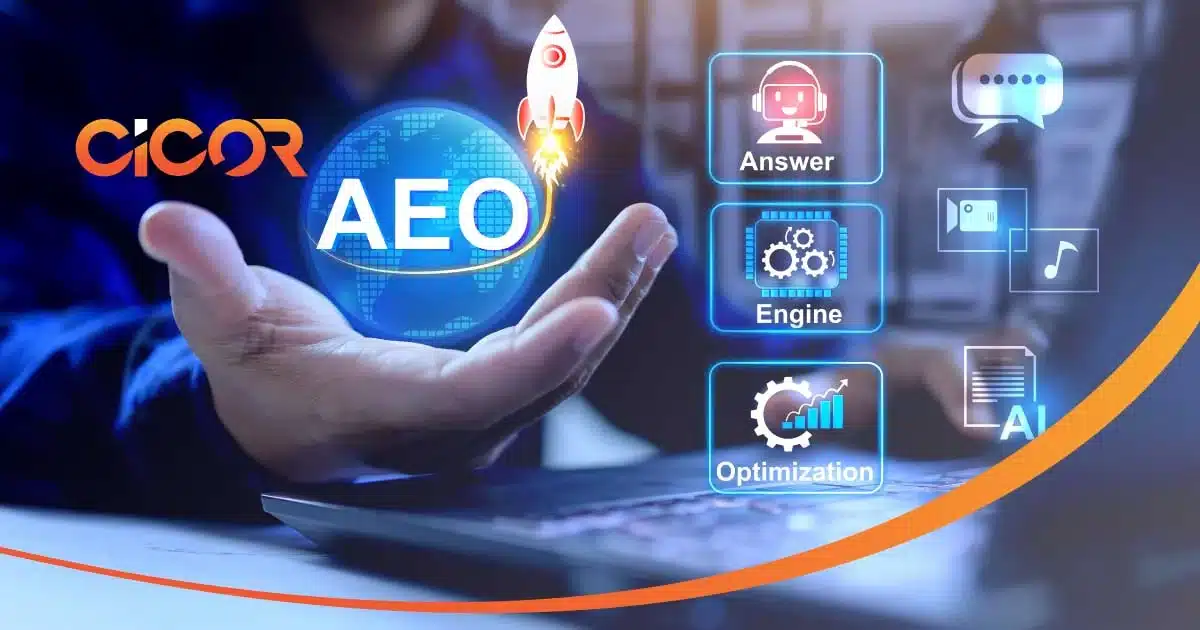
Enhance your online presence with Answer Engine Optimization (AEO), which helps customers find precise answers and boosts your website’s visibility.

How long before these strategies produce measurable results?

Lead generation improvements through better content and landing pages typically show results within 60 to 90 days for organic traffic and faster for paid. Branding alignment has an immediate effect on conversion rates once changes are implemented, though building brand recognition in a market takes longer, often 12 to 18 months of consistent execution. GEO results vary based on how much credible content and authority you have already built.

Businesses with an existing content library that they reformat and optimize for AI readability tend to see movement in 90 to 120 daysStarting from scratch takes longer. The honest answer is that these are compounding strategies, which means the longer you stay consistent, the better they perform. 

By |2026-06-01T15:36:56-04:00May 25, 2026|, , , , |

Can I tell AI tools which pages to prioritize?

You cannot directly instruct AI language models to prioritize specific pages from your site, but you can make it significantly easier for them to find, understand, and use your most important content. One practical method is adding an llms.txt file to your domain root—a plain-text document that outlines your site’s structure, key pages, and their purpose, formatted specifically for AI agents and crawlers rather than human readers.

Beyond llms.txt, on-page signals matter. Content that opens with a clear, direct answer to the question the page addresses is more likely to be extracted by AI systems than content that buries the key point. Proper use of heading hierarchy (H1, H2, H3), FAQ schema markup, concise meta descriptions, and internal linking from high-authority pages all signal which content is most important and what it covers.

Technical accessibility is also a factor. Pages that are crawlable, indexed, and load quickly on all devices are more likely to be included in AI training and retrieval pools. Combining these structural signals with factually accurate, well-sourced content gives your highest-priority pages the best possible chance of being recognized and used.

By |2026-05-28T20:50:45-04:00April 12, 2026|, , |

Do AI systems always provide citations?


No. AI systems do not always provide citations, and the behavior varies significantly by platform and query type. Tools like Perplexity and Microsoft Copilot are designed to cite sources more consistently. ChatGPT and Google Gemini often synthesize answers from trained knowledge without linking to specific pages, particularly for general or evergreen topics. 

Queries more likely to trigger citations include product recommendations, local business searches, recent events, how-to questions with clear procedural steps, and questions that require specific statistics or named sources. General knowledge questions may be answered entirely from a model’s training data with no live source referenced. 

Optimizing content for AEO increases the probability that your pages are identified and used as source material—even when a visible citation link does not appear. Content that is factually precise, clearly structured, and consistently available for crawling is more likely to be drawn on by AI systems, whether or not the system surfaces a link to the reader.

By |2026-05-28T20:38:23-04:00April 12, 2026|, , |

Are backlinks different from AI citations?


Backlinks and AI citations are related but serve different purposes. A backlink is a hyperlink from one website to another; it signals authority and relevance to traditional search engines like Google, helping a page rank higher in organic results. An AI citation is a reference—sometimes with a link, sometimes without—that a generative AI system includes when it draws from a source to construct an answer. They are not the same thing, and earning one does not guarantee the other. 

A page can have strong backlinks and still not be cited by AI tools if its content is not structured clearly enough to extract a direct answer. Conversely, a well-organized, factually precise page can earn AI citations even without a large backlink profile. Backlinks build domain authority over time. AI citations are earned by content that is clear, credible, and directly answers the questions AI systems are asked most often. 

A complete digital strategy addresses both. Strong backlinks raise overall domain authority, which indirectly increases the likelihood that AI systems treat the site as a trustworthy source. But AI citation optimization also requires structured content, clear entity signals, and answers written in a format that generative models can easily extract and summarize. 

By |2026-05-26T21:46:19-04:00April 12, 2026|, , |

How does CICOR Marketing measure AEO success?

CICOR Marketing measures AEO success by looking at whether content is becoming easier for answer engines to find, extract, and use. That includes featured snippet visibility, Google AI Overview appearances, AI citation mentions, voice search style answers, branded search growth, and improvements in the quality of traffic from question based searches. 

AEO success is not measured by one number alone. The better question is whether the content is answering real questions clearly enough to earn visibility in search results, AI summaries, and conversational tools. We also review schema markup, internal linking, page structure, and Search Console data to see whether answer focused content is gaining traction. 

By |2026-05-27T19:52:23-04:00September 22, 2025||

What content works best for AEO?

Content that directly answers a specific, commonly asked question performs best for AEO. This includes FAQ pages, how-to guides, definition articles, comparison content, and step-by-step explanations that place the core answer within the first two to three sentences. The structure of the content matters as much as the subject—a page that takes three paragraphs to get to the point is far less likely to be extracted as a featured snippet or AI answer than one that leads with a clear, concise response.

Factual accuracy is equally important. AI systems and search engines favor content that is consistent with other credible sources, free of vague claims, and supported by specific, verifiable detail. Content that hedges, uses jargon without explanation, or avoids committing to a clear answer tends to be passed over in favor of content that states things plainly.

Pages that focus on a single question thoroughly—rather than covering many topics loosely—tend to perform better. Supporting elements like numbered lists, tables, and clearly labeled sections also help AI systems parse and extract the information they need. FAQ schema markup signals to search engines that a page is structured to answer questions directly, which increases its eligibility for featured positions.

By |2026-05-28T21:20:40-04:00September 22, 2025||

Can small businesses compete with larger companies using AEO

Yes. Answer Engine Optimization can give small businesses a real advantage because AI driven search platforms often prioritize clear, helpful, and accurate answers over brand size alone.

AEO rewards content that directly and clearly answers a question, which means relevance and specificity matter more than brand size or ad budget. A small business that explains its services plainly, answers the questions its customers actually ask, and structures content with clear headings, concise answers, and FAQ schema can appear in featured snippets and AI-generated answers alongside much larger competitors.

Local and niche topics are often easier to win with AEO because national brands focus on broad, high-volume terms. A business with specific expertise in a defined market, service area, or topic can become the most trusted answer for the questions that matter most to its customers—questions that large competitors may not address in enough detail to earn that position.

Consistency and depth of coverage matter more than scale. A site with 20 well-structured, question-focused pages on a narrow topic will often outperform a large site that covers the same topic superficially across hundreds of pages.

By |2026-05-28T20:31:29-04:00September 22, 2025||

How long does it take to see AEO results?

AEO results can appear faster than traditional SEO ranking improvements, though timelines vary based on topic competitiveness, content quality, and how frequently AI tools index or update from your pages. Featured snippet captures and structured answer appearances can sometimes be observed within a few weeks for lower-competition questions. More competitive markets or broader topics generally take three to six months before consistent visibility develops.

AI citation frequency is harder to predict because it depends on how often different AI platforms update their retrieval systems and training data. Some platforms refresh frequently; others are slower. Content that is factually accurate, clearly organized, and directly responsive to common questions tends to accumulate traction steadily across both traditional and AI-powered search channels.

The most reliable approach is to treat AEO as a compounding investment rather than a one-time project. Pages optimized for direct answers build authority over time, and each improvement in structure or schema adds to the overall signal that the content is trustworthy and useful.

By |2026-05-28T20:55:10-04:00September 22, 2025||

What types of businesses benefit most from AEO?

Any business that relies on customer research before a buying decision can benefit from Answer Engine Optimization. When people search questions online before choosing a provider, product, or service, AEO helps position your business as a trusted source of information.

This is especially valuable for professional services, healthcare practices, home service companies, financial advisors, legal firms, and B2B organizations where trust and expertise influence decisions. Businesses with complex services or longer sales cycles often see the greatest impact because customers tend to ask more detailed questions before taking action.

If your audience is actively searching for answers related to your industry, services, or expertise, AEO creates an opportunity to become part of the conversation before a customer ever reaches out.

By |2026-05-21T19:41:56-04:00September 22, 2025||

Why is AEO important for my business?

AEO is important because more people now get answers without clicking through a list of search results. Google AI Overviews, voice assistants, ChatGPT, Gemini, and Perplexity all surface direct answers to questions—and the businesses whose content earns those positions gain visibility at the exact moment a prospect is deciding who to contact or trust.

When content consistently appears as the answer to questions in your industry, it builds brand familiarity before a prospect ever visits the site. This pre-visit credibility shortens the research phase and positions the business as a trusted authority. It also captures demand from users who phrase searches as full questions—a growing share of all search behavior, particularly on mobile and voice devices.

Businesses that invest in AEO now are building an asset that compounds. Content optimized for direct answers earns featured snippets, AI citations, and voice search placements that continue driving visibility over time. As search increasingly shifts toward AI-mediated answers rather than ranked link lists, the businesses positioned to be cited rather than just ranked will maintain a significant advantage.

By |2026-05-28T21:25:11-04:00September 22, 2025||
Go to Top